Data sits at the heart of modern marketing
As data-driven marketers, we’re trained to believe that decisions should be guided by research and evidence. But there is a critical difference between collecting raw information and organising that information into clear, decision-ready insight.
Collecting feedback is only the first step. On its own, feedback collection often leaves marketers with a mix of friction points, comments, and scores, but very little clarity.
Traditional methods such as comment cards or a single digital form can tell you what people felt, but not why, when, or who those experiences mattered most to.
Feedback only becomes valuable when it can be clearly reported, shared, and used to inform decisions at every level of the organisation.
This is especially true in experience-driven environments like museums and cultural attractions, where insight into the full visitor journey matters just as much as footfall metrics.
A quick sanity check on your reporting system
To assess whether your reporting is truly robust, do a quick sanity check and ask yourself the following questions, and see how quickly you can answer them:
- At what time of day are you visitors most satisfied or most dissatisfied?
- How do international visitors experience the museum compared with local audiences?
- How do extreme scores (very low vs very high) influence strategic decisions and priorities?
- Are low scores isolated incidents, or part of a broader trend that needs attention?
For marketers, if you’re unsure where to find answers to these questions, it’s a sign your reporting system needs rethinking. You may have data, but not insight you can confidently share with leadership or use to influence strategy. Feedback becomes reactive — just another set of data points to monitor — rather than a tool that actively drives decision-making.
This is where reporting changes everything.
What does a good feedback reporting system look like?
By layering time-based analysis, audience segmentation, sentiment trends, and comparative views on top of raw feedback, a good reporting system should transforms individual responses into a clear, structured narrative. It allows marketers to move beyond “what happened” and start answering “what does this mean, and what should we do next?”
This is particularly true in experience-driven environments like museums and cultural attractions, where understanding how visitors feel is just as important as measuring footfall. Real-time feedback provides immediacy, but without strong reporting, even the richest data risks becoming siloed or underused.
A real world example
One of our clients, the Norton Museum of Art, puts this challenge into sharp focus. As CMO Charlee Nolan explains:
“So in our roles, understanding how our visitors are experiencing the museum, it’s extremely critical.
But if we are not able to take that information and share it with our leadership team and our board members to help them lead the larger strategy and make the big picture decisions, the data doesn’t help us.
So the data is really only as good as the reporting is.”
This philosophy shaped how feedback was approached at the Norton Museum of Art. From the outset, feedback collection was designed with reporting in mind, ensuring visitor insight could be confidently shared with leadership and board members. As a result, data didn’t just highlight what was happening on the floor — it supported strategic decisions around programming, engagement, and long-term audience growth.
Read the full case study and watch the interview below to see how reporting transformed feedback into leadership-level insight.
How Avius reporting advances marketing strategy
Avius reporting understands what marketers need.
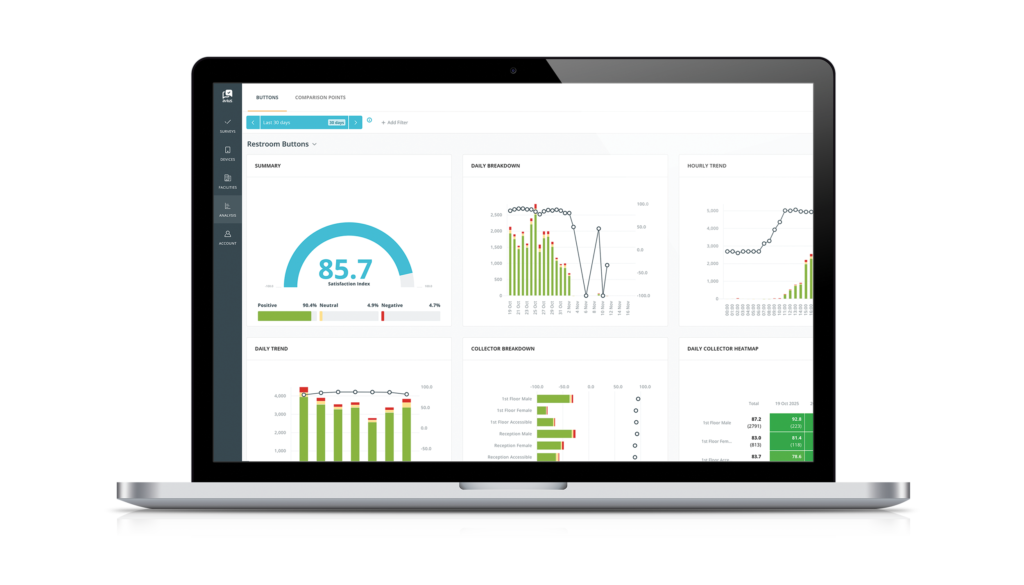
One single portal with powerful dashboards bringing together feedback from multiple locations, online or off-line touchpoints, and survey types, marketers gain a unified view of the visitor experience.
“The [Avius] reporting has been an absolute game changer for us as a marketer.”
Automated reporting, flexible visualisations, and different data views make it easy to spot trends, compare performance, and tailor insights for different stakeholders, from operational teams to senior leadership and board members. When feedback is reported well, it closes the loop. Visitor voices don’t just get heard, they help shape strategy, strengthen decision-making, and elevate the role of marketing from insight gathering to strategic leadership.
Ready to Turn Feedback Into Actionable Insight?
From survey design to leadership-ready reporting, Avius helps you turn visitor feedback into insight that drives decisions.